WhatsApp Us
360 Performance Academy · Darts Skool
360 Darts

Train the Mind That
Controls the Throw

The gap between how you play in practice and how you perform in competition is not a technique problem. It is a mental one. Darts Skool is a structured performance environment built around the mental side of the game — evidence-based, data-tracked, and designed to close that gap.

“So much of sport is that mental attitude.”

Phil Taylor  ·  16× World Darts Champion

Jump to: Player Type Quiz Player Plus Reports Our Players Foundation Reports
30+
Player Plus Members
500+
Performance Sessions Delivered
World
Athletes Coached at World Level
£59
Player Plus Per Year
What We Work On

Six Areas That Decide Performance on the Oche

Every coaching session, every report, every task — built around these six pillars.

Performing Under Pressure
Performing Under Pressure on the Oche
Stay composed from the first throw to the deciding leg. Competition pressure is learnable. Every response is trainable.
Confidence
Confidence That Holds Through the Match
Build confidence in your throw that carries into a deciding leg — not just the practice room. Confidence tracked by data, month by month.
Attitude Attention Intention
Attitude · Attention · Intention
Three pillars. One system. Every Player Plus report tracks all three, month by month, match by match — so you can see exactly where the numbers say you really are.
Resilience
Resetting After a Missed Double
A missed checkout does not end a match. How you respond does. Build the reset that keeps you in it — practised, reliable, automatic.
Dartitis
Dartitis and the Throw That Won’t Release
The mental block that freezes the arm. Understood, structured, and worked through — not avoided. The pattern is identifiable. The behaviour is changeable.
World Champions
The System That Trained World Champions
The same framework used by JDC World Champions, WDF title winners, and international medallists. Available to every player — junior, amateur, or professional.
Free for Everyone

Have You Taken the Darts Player Type Quiz Yet?

The Player Type Quiz is not just something to take out of curiosity — it is a performance tool. By identifying how you naturally think, compete, and respond under pressure, Stuart can tailor your coaching to fit who you actually are as a player, not a one-size-fits-all template.

Once you know your type, you understand your strengths, your patterns under pressure, and exactly where your coaching focus needs to be. Every Player Plus report references your type. The analytical picture makes more sense when you know the player behind it.

Take the Quiz — It’s Free
What’s Your Player Type?

You receive a primary type and a secondary — showing how your two dominant types interact under pressure.

Technical Feel Confidence Fire Starter Thinking Ice Flow Warrior Artist Power
How It Works

Three Levels. One System. You Choose Your Depth.

Start with the Skool community. Add the data layer when you’re ready. Go deeper with 1:1 coaching if that’s the level you want.

Step 1
Join Darts Skool
$53 USD (£40 approx)
per year · billed via Skool platform
Full access to the Skool community — content, courses, and coaching
Downloadable HTML player resources for use at the oche
In-depth courses: pressure management, pre-match preparation, and The Consistency Code
Dartitis quiz inside Skool — Stuart reviews every result personally
Player Type Quiz — issued on joining, shapes your coaching from day one
Goal-setting form on joining — sets the direction for your first month
Community posts, discussions, and Stuart’s regular insights
Step 2
Upgrade to Player Plus
£59 / year
billed via Stripe · add on top of Skool
Monthly performance report — Attitude, Attention, and Intention scored and interpreted
AAI scoring with tasks built from your exact data and player type
Post-match report issued after key competitions — task accountability and key moment analysis
Personal coaching feedback from Stuart every single month
Season trend tracking — AAI data month by month across the season
Six-month performance history table with trajectory
Step 3
1:1 Coaching with Stuart
By application
for players who want direct, individual coaching
Direct 1:1 coaching sessions with Stuart Robertson
Built around your specific player type, data, and current season goals
For players who want the highest level of individual attention and accountability
Start with a free discovery call to find out if it’s the right fit
Player Plus — Premium Tier

The Analytics Layer
Above Skool.

Already inside Skool? Player Plus is the upgrade — monthly reports, post-match reports, season tracking, and direct coaching feedback from Stuart.

The scoreboard tracks wins and losses. The AAI tracks what is actually happening underneath — attitude, attention, intention — month by month, match by match. That is what makes the coaching land.

The Foundation

Where Every Player Plus Member Starts

Three foundation reports build the baseline for everything that follows. The Player Type Quiz identifies how you naturally play. The Baseline Report captures where you are right now. The Goal Setting Report locks in where you want to be.

Together they generate your original AAI score and your first set of coaching tasks — built specifically from your answers, not a template. Every monthly report after that updates the picture and adjusts the focus.

01
Player Type Quiz
Identifies how you naturally think, compete, and respond under pressure. Your primary and secondary type shape every coaching task and report that follows.
02
Baseline Report
Captures your starting AAI score — Attitude, Attention, Intention — and establishes where the analytical work begins. Every monthly report is measured against this baseline.
03
Goal Setting Report
Locks in your Season Identity Goal and the specific outcomes you are working towards. Stuart builds your first coaching tasks directly from your answers.

EXAMPLE PREVIEW — Illustrative only. Full Player Plus reports contain significantly more depth and detail than shown here.

Example — Player Plus Monthly Report — All figures are illustrative
360 Performance Academy · Player Plus
Monthly Performance Report
Report Period: April 2026  ·  Month 6 of Season  ·  Player Type: Technical / Ice
Attitude · Attention · Intention
Attitude
7 /10
Tasks completed4 / 5
Behavioural rules held3 / 4
Measures tracked6 / 6
vs previous month+2
Task from data One behavioural rule went unmet. Identify which rule slipped and log the specific match moment where it broke down.
Attention
7 /10
Tasks completed3 / 5
Behavioural rules held2 / 4
Measures tracked5 / 6
vs previous month+3
Task from data Two rules unmet and two tasks incomplete — attention is the lagging pillar. Hold your pre-throw routine on every dart in your next three practice sessions without exception.
Intention
8 /10
Tasks completed5 / 5
Behavioural rules held4 / 4
Measures tracked6 / 6
vs previous month+1
Task from data Perfect completion across all tasks, rules, and measures. Extend the tracking this month by logging your first-dart target before each throw in practice.
Six-Month Performance History
Month Attitude /10 Attention /10 Intention /10
November667
December767
January768
February778
March778
April — current778
Season Trajectory — Three Pillars
Attitude
Attention
Intention
Coaching Insight — April 2026
Stuart’s Analysis
Your Intention pillar is the strongest it has been all season — five from five tasks, all four behavioural rules held under match conditions. The pre-throw routine work is landing and it is beginning to become automatic. The focus this month is Attention. The data shows a consistent pattern: as match pressure increases, attention narrows onto outcome and pulls away from process. We are going to work directly on that pattern. The flat month in March makes sense given three separate events across a four-week window. The return to growth this month confirms the system is working. The direction is right. Now we push through the 75 ceiling.
April Coaching Tasks
1
After any missed double, execute the three-breath reset before stepping back from the oche. Practise in training until the response is automatic — not a conscious decision in the moment.
2
Before each finish attempt, hold your attention on the target for one full breath before stepping up. Track whether you held it — one word in your log after each match.
3
Complete the attention-anchoring exercise twice per week — fifteen minutes, replicating training conditions. Increase the difficulty level after week two.

EXAMPLE PREVIEW — Illustrative only. Full Player Plus reports contain significantly more depth and detail than shown here.

Example — Player Plus Post-Match Report — All figures are illustrative
360 Performance Academy
Post-Match Report
Competition Review & Mental Performance
POST-MATCH
Player A — Warrior / Confidence Regional Open · April 2026
Competition
Regional Open — Runner-Up
Level:County Ranking Event
Date:April 2026
Feeling:Satisfied · 8/10
StageResultScoreNotes
Round 1Win3–1Highest opening-round average of the season
Round 2Win3–2Dropped legs 3 & 4, recovered clean
Quarter-FinalWin3–2Strong finish under pressure, no carry-over
Semi-FinalWin4–3141 checkout at 3-3 to reach final
FinalLoss4–5Led 3–1, lost four legs in a row
First Open Final Reached SF 141 Checkout Under Pressure Routine Held Across Five Matches
Performance Snapshot — Under Pressure
Attitude
Held Under Load
8/10. Dropped two legs mid-tournament and reset immediately each time. No carry-over between rounds. Reset between R2 and QF was the cleanest of the season.
Held
Attention
Mostly Locked
7/10. Four clean matches. In the final, attention shifted to the scoreline around leg five when leading 3–1. Outcome-thinking crept in exactly when the lead felt largest.
Partly Held
Intention
Fully Committed
9/10. Pre-visit routine held across all five matches without exception. SF 141 was pre-decided before stepping up. Most consistent Intention score of the season.
Held
Task Accountability — Did Your Current Tasks Hold?
Attitude
“Control the controllables.”
After any dropped leg, reset in under two minutes. The next leg starts clean with no carry-over from what just happened.
Held Under Pressure?
Held
Between R2 and QF you dropped legs 3 and 4 consecutively — the pattern that historically unsettles your prep heading into the next round. You walked into the QF with no visible carry-over across the first three visits. The reset is now running automatically, not as a decision.
Attention
“Round 1 is the final’s first leg.”
Treat every early round with the same engagement as a deciding leg. No half-speed openers, no warming into the match.
Held Under Pressure?
Partly Held
R1 won 3-1 at your highest opening-round average of the season — the task is visible in the data. It held through R2, QF and SF. Broke down in the final when leading 3-1, attention moved to the scoreline and three legs followed to the opponent. Held in four from five matches. The one it didn’t hold in was the final. That is the next layer.
Intention
“Name it before you throw it.”
Pre-decide every visit. Target named internally before stepping up. No mid-approach changes, no decisions made at the oche.
Held Under Pressure?
Held
SF leg 11 at 5-5, needing 121, opponent waiting on 56. Pre-decided before stepping up: T20, T19, D12. Executed on the visit. That is the task working under the highest-pressure moment of your season so far — not in training, not in an early round. In a deciding leg with a final at stake.
Match Statistics — Regional Open
Three-Dart Average
84.2
Personal best for a five-match tournament day. +3.7 above your 90-day rolling average. Averages did not drop across consecutive matches.
Checkout %
42%
14 from 33 attempts. Above your 38% rolling baseline for ranking events. Highest competition finish of the season: 141.
180s
6
Across five matches. No match with zero 180s — maximum-score consistency held throughout the full day.
First 9 Avg
3.92
Darts per visit in the first-9 scoring. Rolling baseline: 4.1. Opening visits were the cleanest of the season.
What the Numbers Tell Us

The 84.2 average across five matches is the headline stat — but the more significant data point is that the average did not drop from match one to match five. Most players at this level see a 3–5 point decline across a full-day tournament as fatigue accumulates. Yours held. That is a focus management and endurance result, not just a darts result. The coaching work on pre-visit routine is showing in the consistency of the scoring output.

The 42% checkout rate is above your rolling baseline and above the event average for the level you competed at. The stat that matters most inside that number is the ratio of first-dart doubles hit to first-dart doubles missed. Your coaching record now tracks this as a separate metric going forward — the checkout percentage tells you the result; the first-dart double rate tells you where the margin lives.

What Worked · What Slipped
What Worked
+Reset between R2 and QF — dropped two legs, no carry-over visible in the next match.
+Highest opening-round average of the season — R1 engagement task now showing in the data.
+SF 141 at 3-3 under maximum pressure — pre-decided, executed, no mid-approach drift.
+Pre-visit routine held across all five matches for the first time this season.
+First Open Final reached — the level transition is confirmed and on the scoreboard.
What Slipped
-Final leg 5 — attention moved to the scoreline when 3-1 up. Four legs lost from that point.
-Outcome-thinking triggered by being ahead, not behind — a new pattern that needs specific work.
-Post-match frustration took longer to reach neutral than the task target — approx 25 minutes.
The Sentence To Sit With
“In the semi I wasn’t thinking about anything. Step up, name the target, throw. In the final, somewhere around leg five, I started thinking about winning. That’s when it shifted. The routine was still there but my head was somewhere else.”
This sentence is the next coaching cycle. The pre-visit routine didn’t disappear in the final — the attention context it runs inside did. The distinction matters: this is not a routine problem. It is an attention management problem triggered by a specific condition: a comfortable lead. That is a more precise target than anything we have had to work on before. And it means the next cycle has a clear entry point.
Key Learning — In Your Own Words
“The routine is there. The problem was that my head left the process before the match was over. I need to be able to hold the same headspace when I’m winning as when I’m level.”
What This Confirms
The Intention task is now running automatically under match pressure — the SF 141 proves it. The next layer is Attention under a specific condition: holding process focus when the scoreline creates noise in the direction of the win. That is a solvable problem. The May coaching cycle is built directly from this report.
Next Focus: Process Holding When Ahead
The June ranking event is the test. The target behaviour is not winning from 3-1 up — it is maintaining process focus from 3-1 up. The score is irrelevant to the routine. That is the principle. Building the automatic connection between a comfortable lead and a tighter process focus is the specific work for the next six weeks.
Coaching Read

Five matches, first Open Final, a 141 checkout in a deciding semi-final leg under maximum pressure. The Intention task has passed its hardest test of the season. The pre-visit routine is no longer something you choose to do — it runs automatically even when the match demands everything you have. That is the training goal for the past four months, confirmed on the scoreboard.

The final loss is data, not failure. You have now experienced the specific conditions that break your attention: a comfortable lead with the win visible. You hadn’t experienced it before because you had not been in a position to. Now you have. Now we know the trigger, the moment, and the internal pattern that needs the next layer of work. A routine win from 3-1 up in that final would have given us nothing to build on.

First Open Final reached. SF 141 under maximum pressure. Intention task confirmed automatic. Attention under a comfortable lead is the May target. That is the exact layer the data identified and the next coaching cycle addresses it directly.
Join Player Plus 💬 Ask Stuart About Player Plus
360 Player Plus

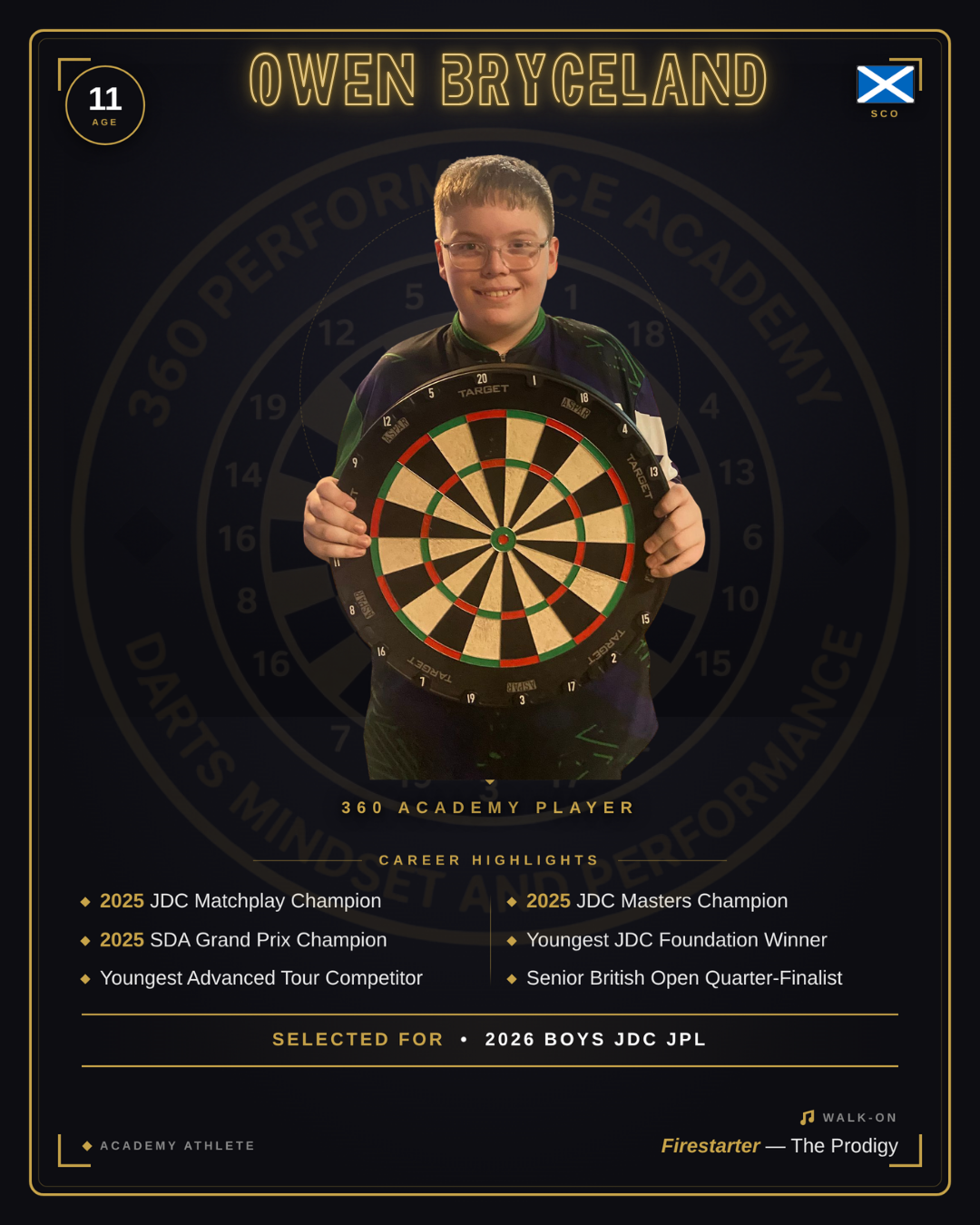
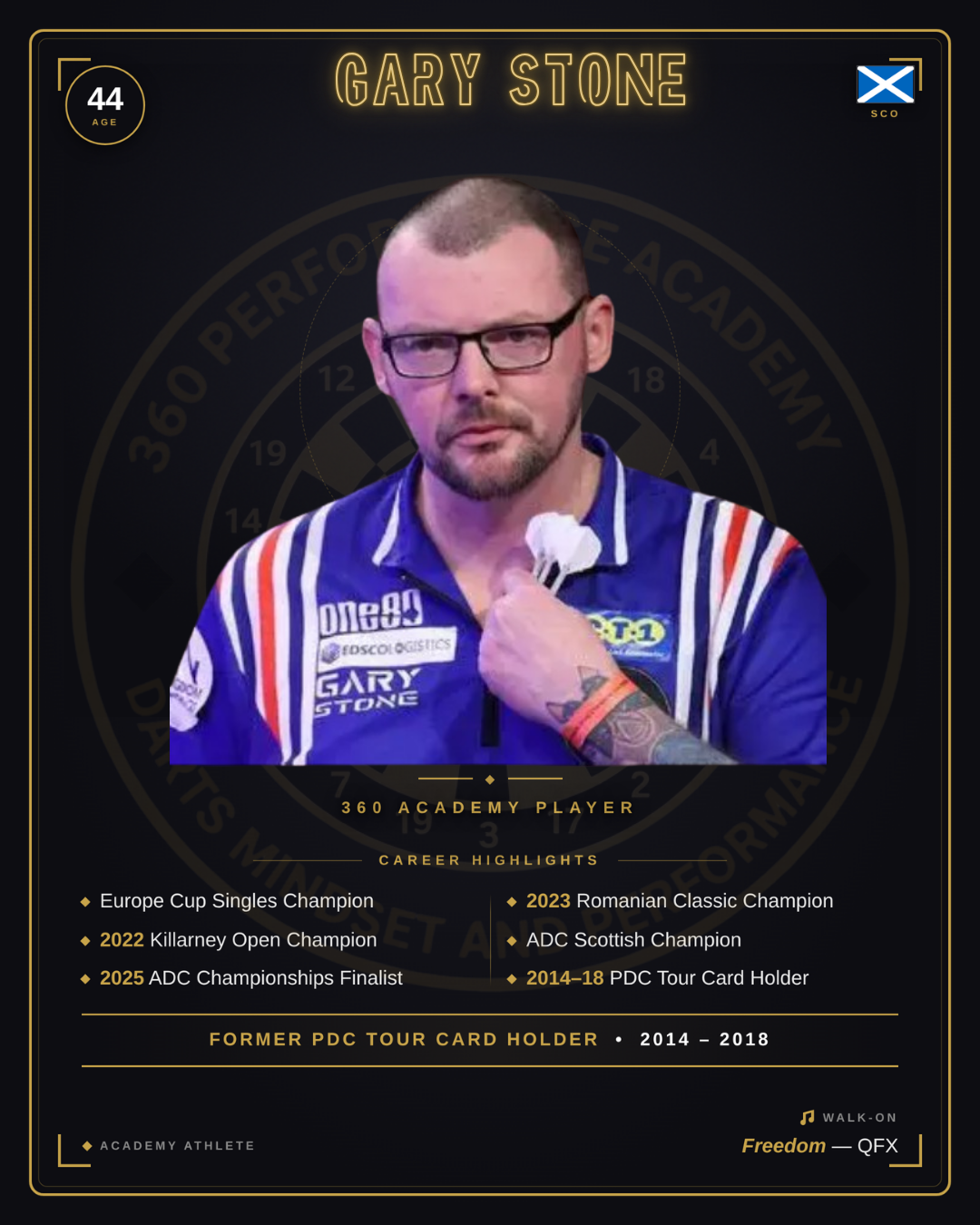
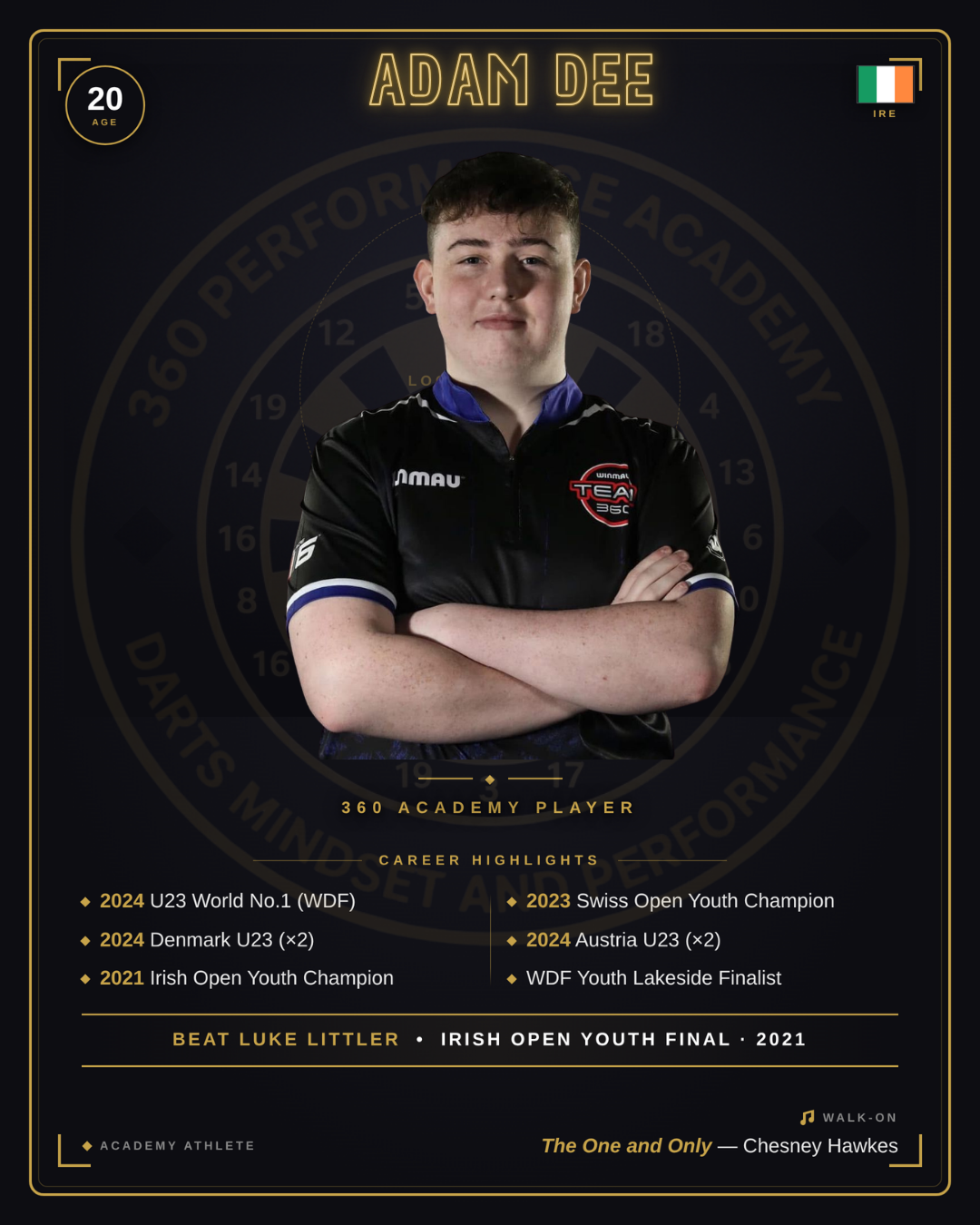
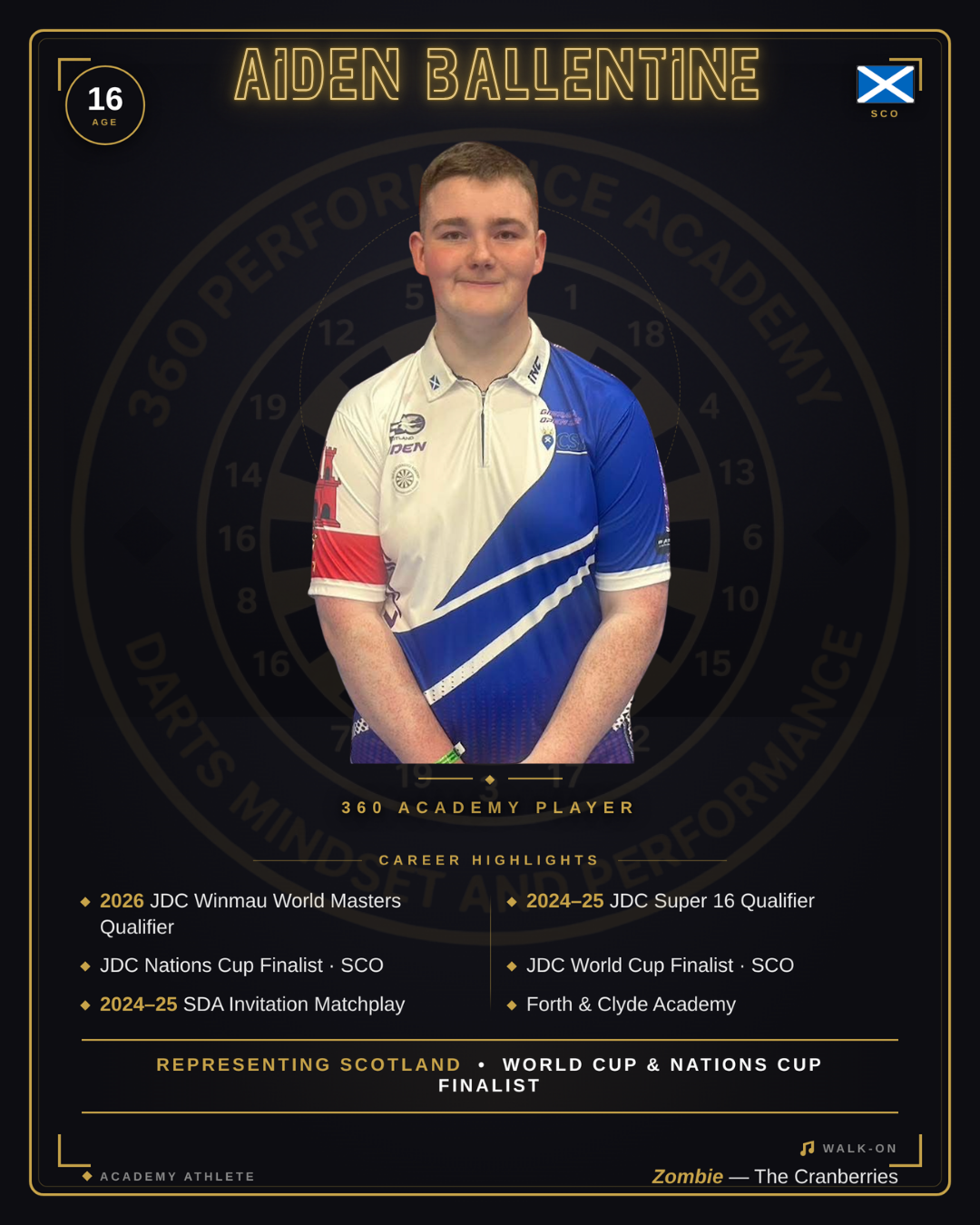
Just Some of Our Darts Player Plus Members

A selection of the competitive players currently working with the full Player Plus system. Many more aren't shown here.

View All Members

“Darts is more psychological than anything… staying mentally strong.”

Fallon Sherrock  ·  History-Making PDC World Championship Player

Ready to Train Your Mind?

This is not about doing more. It is about doing the right things — consistently.

Explore the Darts Skool Book a Free Discovery Call